Author Archives: patkar

Natalie: February

Aktau Sea Port

F7
Gouache on paper, 42 x 59 cm

This study was completed under the direct influence of Barnett Newman’s infamous zips, as well as Rothko’s push and pull techniques, as I was going through their biographies during that particular week. The initial idea was to capture the beauty of an otherwise ordinary day at the local sea port. I deliberately avoided any details since the main goal was to capture the colours that stood out the most. The squares and rectangles represent the shipping containers loaded onto the ships using the yellow cranes. The study was completed using a photograph as the main source.


Abandoned site

F4
Acrylic on paper, 20 x 20 cm

The small study was indeed of an actual abandoned site and the photograph appeared in the local news. Normally I avoid working with photos that are not mine, since I cannot connect with them. However, the left coat on a chair had such an impact on me that I started to feel the atmosphere, which I then wanted to capture. I did several studies and I don’t think this is going to be the last version of it…


A little walk around the town (Aktau)

F3
Acrylic on paper, 29 x 26 cm

I am desperately trying to understand perspectives and so urban sketches attract my attention more and more. This study was completed on the same day that I took a ‘no idea what for’ photo of this building. It was pretty sunny, but still a muddy day!


It’s time to be fed (R)

F6
Charcoal on paper, 42 x 59 cm

This is my response for Patricia’s Snowed-in planters (January). I wanted to create a continuation of the story. I ended up with sketches of cows, to demonstrate a symbiotic relationship in nature, i.e. for the grass to be able to grow back some of the tips need to be removed whilst at the same time cows need to be fed. I realize that Patricia’s plant is not the same as grass, but I used it as a symbolic gesture only. These two drawings would look rather organic if placed together. Maybe this is something we should consider in the future.


Three shells (R)

F2
Charcoal on paper, 29 x 20 cm

This is my response to Patricia’s Snowy terrace with wooden stool and planters (January). I immediately wanted to produce a drawing with eggs! The thought of using eggs might seem a bit banal, but it was the first thing that came into my mind. One could call it a truly free association response. I wanted to capture the drawing’s elegant fragility.


Sunset (R)

F1
Gouache on paper, 29 x 42 cm

When I saw Patricia’s Sunrise over the city (January), I immediately wanted to respond to its colour only and I thought Mark Rothko’s Colour Filled style would be the most appropriate to express my first impressions. My response turned out to be not as subtle as Patricia’s work, which might give a misleading impression about my perception of the original painting.

Patricia: February

Potted plant

IMG_5050
Pencil on paper, 35 x 28 cm

Study of a tiny pineapple plant. I liked the growth pattern and the shapes of its drying external leaves.


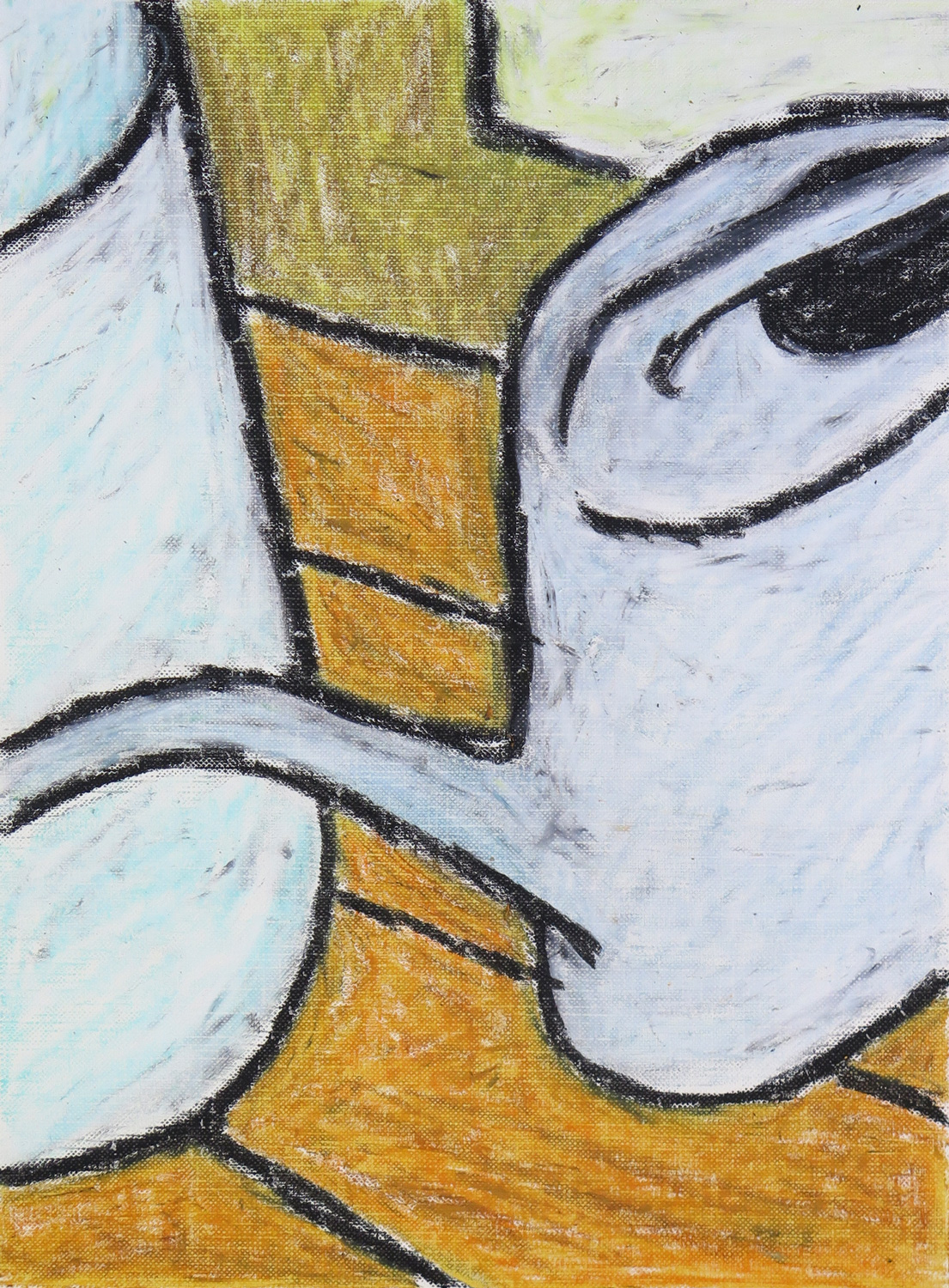
Still life with watering can

IMG_5052
Oil pastel on paper, 30 x 23 cm

I rediscovered my little viewfinder which is a great tool to develop bold compositions. It greatly helps me to crop my objects in unusual ways, whereas otherwise I tend to create very conventional arrangements.


Winter Market (R)

IMG_5054
Coloured pencil on paper, 29.5 x 42 cm

The Farmer’s market in Midtown Manhattan. During the winter times the market only comprises a few pavillions. I found it interesting to depict the somewhat abstract patterns of people and merchandise in the midground. The drawing was inspired by Natalies ‘Black Entrance’ painting, I responded to the concept of a ‘street scene’.


New York Lights (Male figure) (R)

IMG_5055
Oil on paper, 60.5 x 46 cm

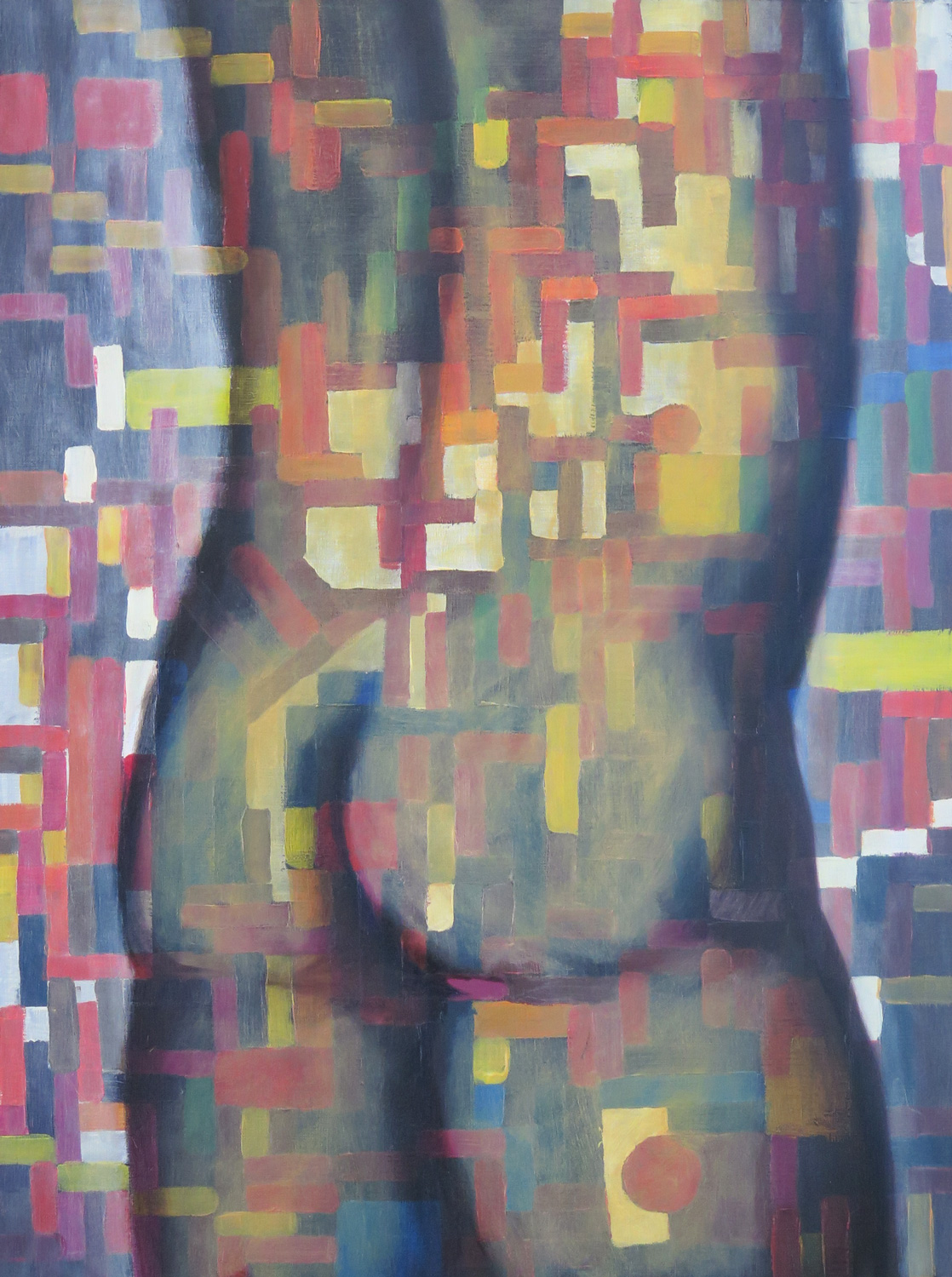
This painting was a response to Natalie’s ‘Thinking Man’, with a lot of subconscious work going on. I think I was inspired by the irregular, patchy colour patterns and the male figure in Natalie’s painting. I developed a colour pattern phantasy in warm yellow-orange-red-brown spots and the idea to somehow integrate a male torso. The colour pattern was created as an acrylic underpainting, and the process was very intuitive and very exhausting. I was ready to abandon the torso idea but the painting looked incomplete and unbalanced. After I added the transparent torso, the painting felt complete, that vague initial idea had materialized.
 

Still life with squash, zuchini and onion (R)

IMG_5058
Oil on canvas, 19 x 39 cm

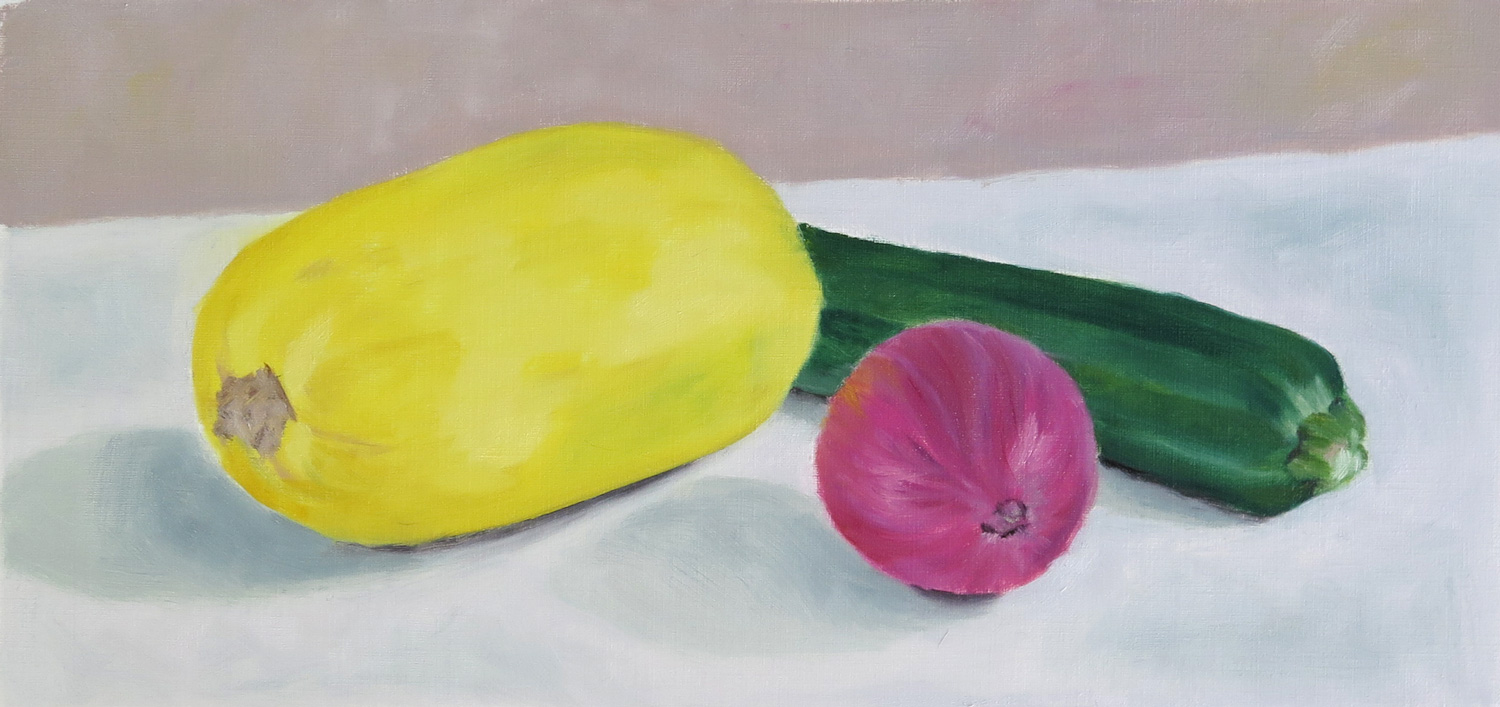
A kind of practice still life inspired by Natalie’s ‘Jam’ charcoal sketch, of which I liked the bold and simple composition. In my painting, I focused on developing shades of the local colour to emphasize volume, and tried to keep colours fresh. Overall I think the painting would benefit from a more elaborate context – the white and beige background is a bit dull.


Abstract composition (Interior view)

IMG_5070
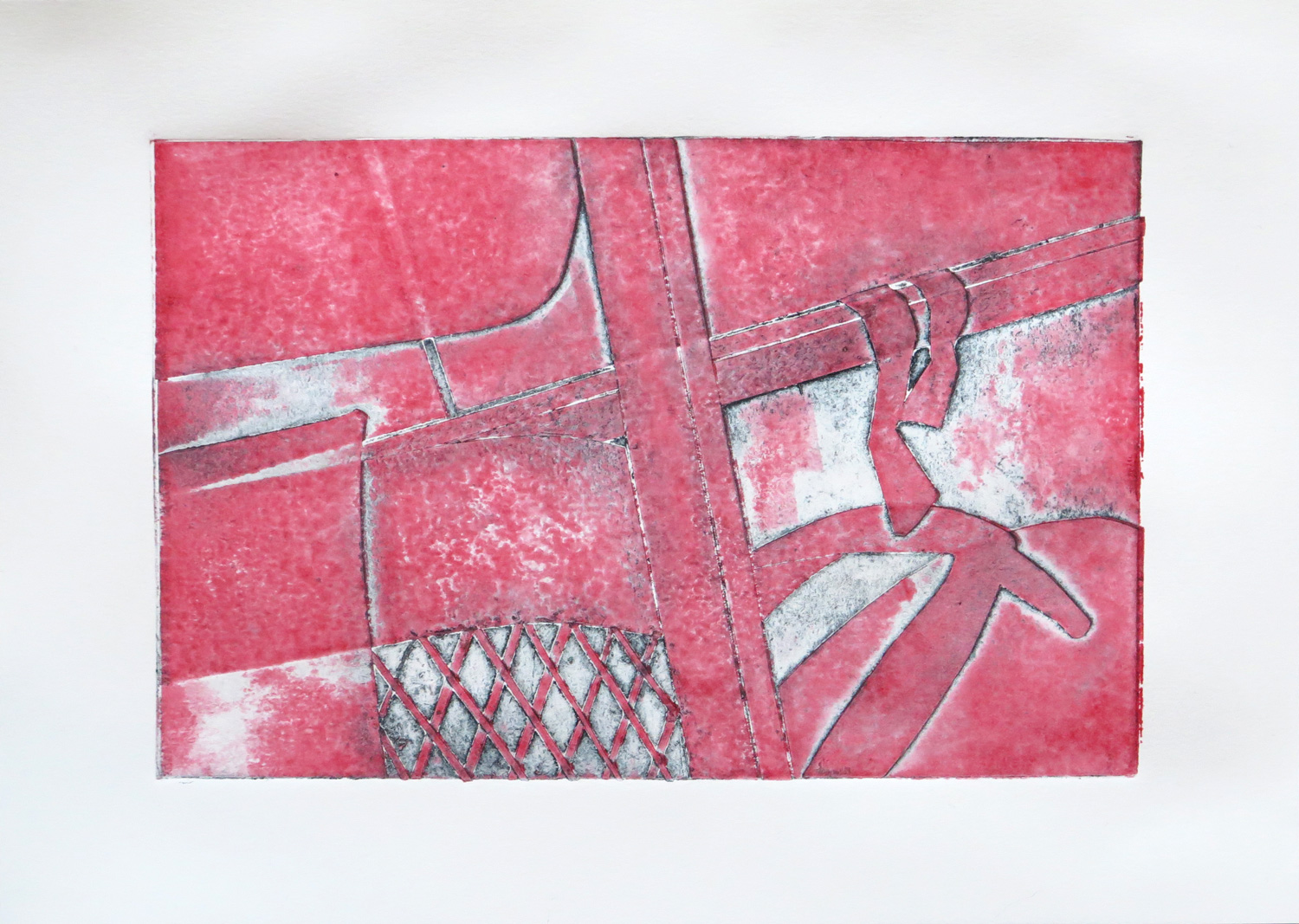
Collagraph print on paper, 21 x 30 cm

I developed the composition for this print with the viewfinder. I was looking for interior views with interesting compositions which would lend themselves for an abstracted treatment. The printing plate was made by glueing cut paper shapes onto cardboard, then sealing with shellac. This is the final of a series of six prints, where I experimented with the technique. It combines the intaglio method of wiping away ink from the relief (dark blue linear elements) with relief inking (red areas) and was printed in a single run through the press on slightly damp cartridge paper.

Patricia: January

Sunrise over the city

1 IMG_4978
Watercolour and ink on paper, 32 x 24 cm

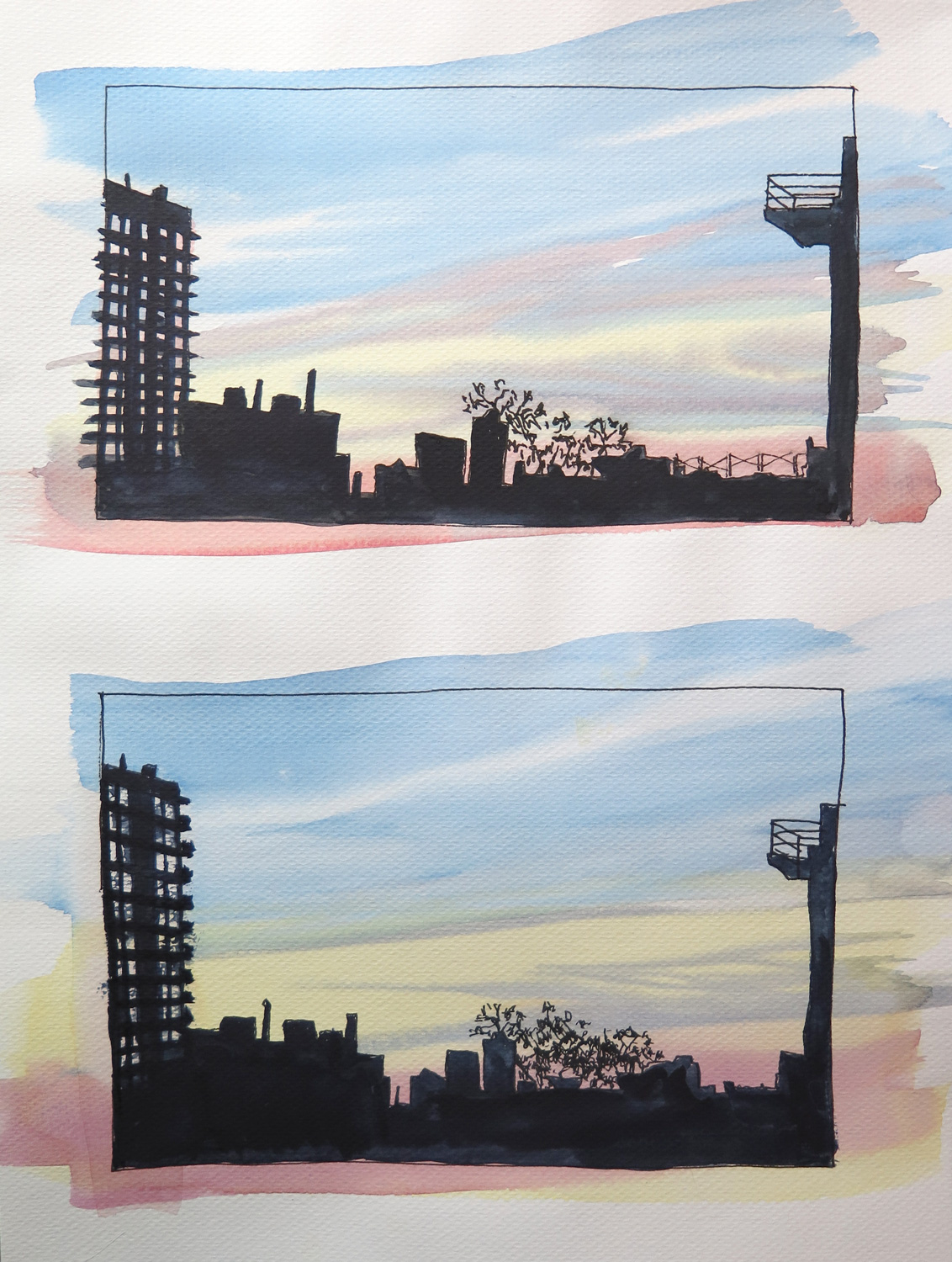
An attempt to capture the colourful morning sky using a watercolour wet-in-wet technique. I made a series of about 15 practice watercolours of only the sky until I saw some technical progress, then added the black ink for the silhouette of the houses. I was fascinated by the strong contrasts in the light situation.


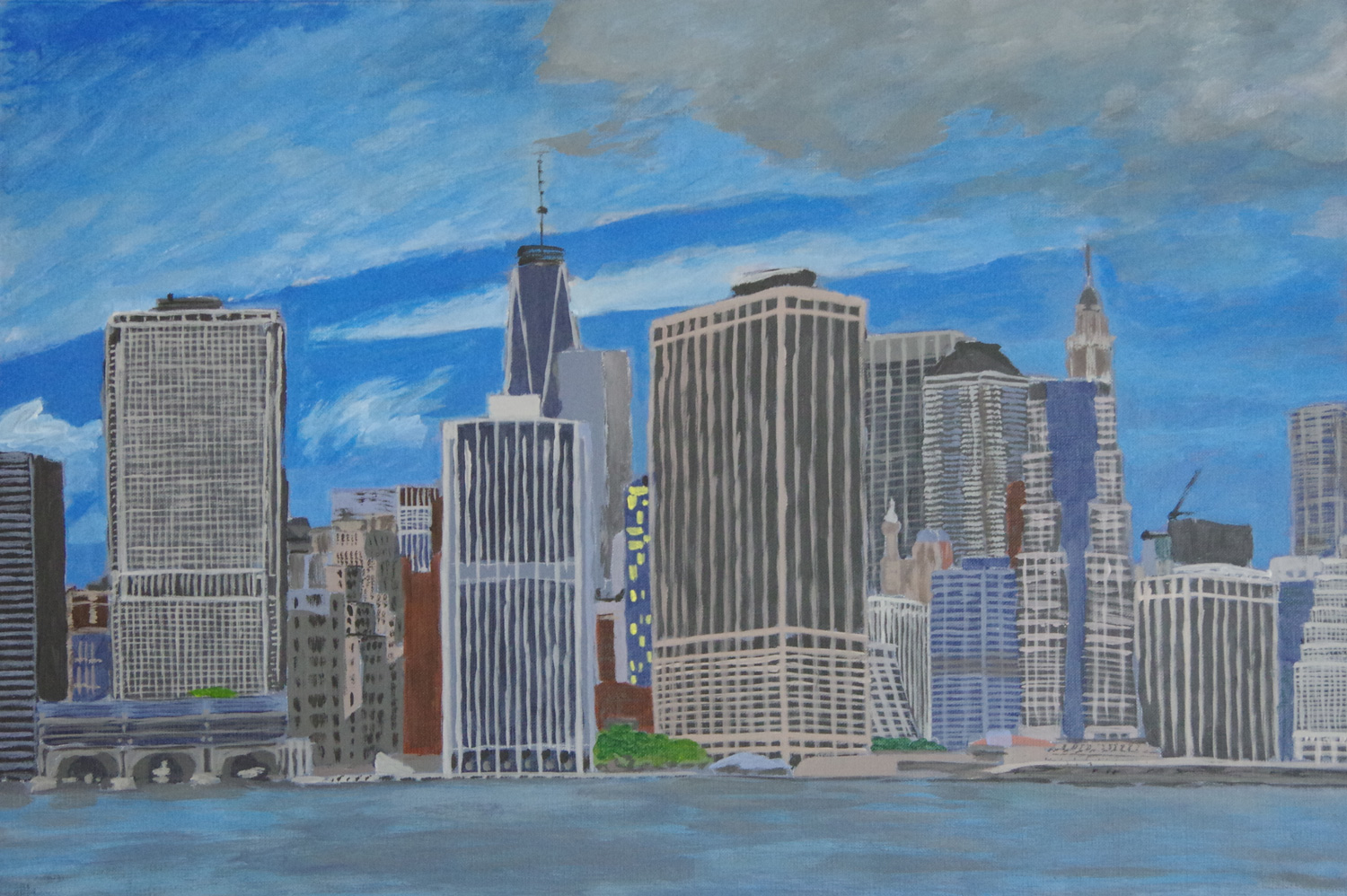
Manhattan Highrise surface fabric (R)

2 IMGP0153
Acrylic on paper, 40.5 x 50.5 cm

Since I’m in New York, I’ve been intrigued by the surface fabric of the highrises that dominate the city’s appearance. Natalie’s ‘Apartment Blocks’ (Incubator period) inspired me to take up the topic in a painting. In the future, I’d like to develop the approach further towards a more abstract interpretation.


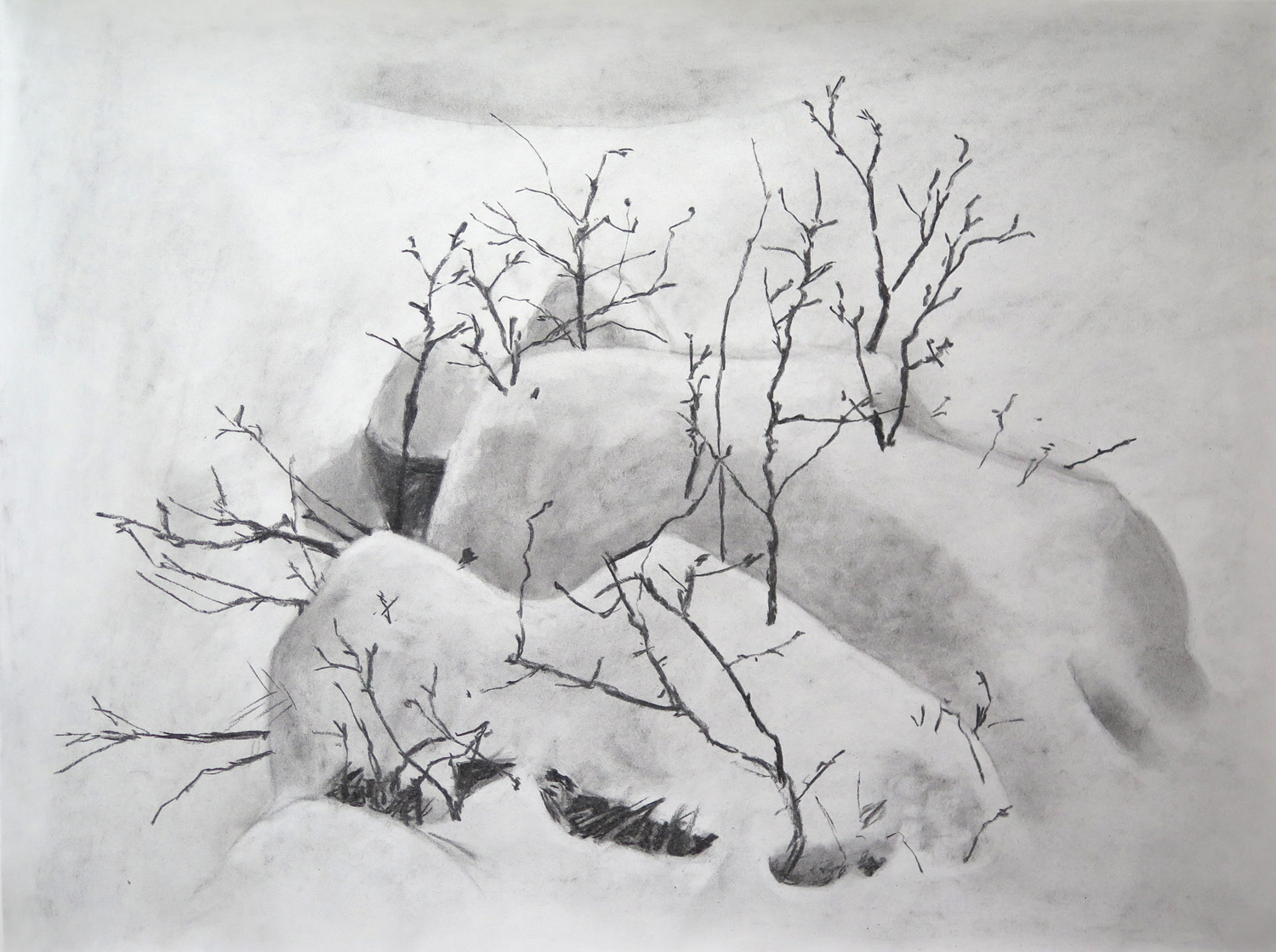
Snowed-in planters

3 IMG_4920
Charcoal on paper, 45.5 x 60.5 cm

In awe of the massive amounts of snow in this winter’s first snowstorm, I sketched the snowed-in planters on the terrace, as seen from my studio window. I wanted to depict form through the different shades of white in the snow.


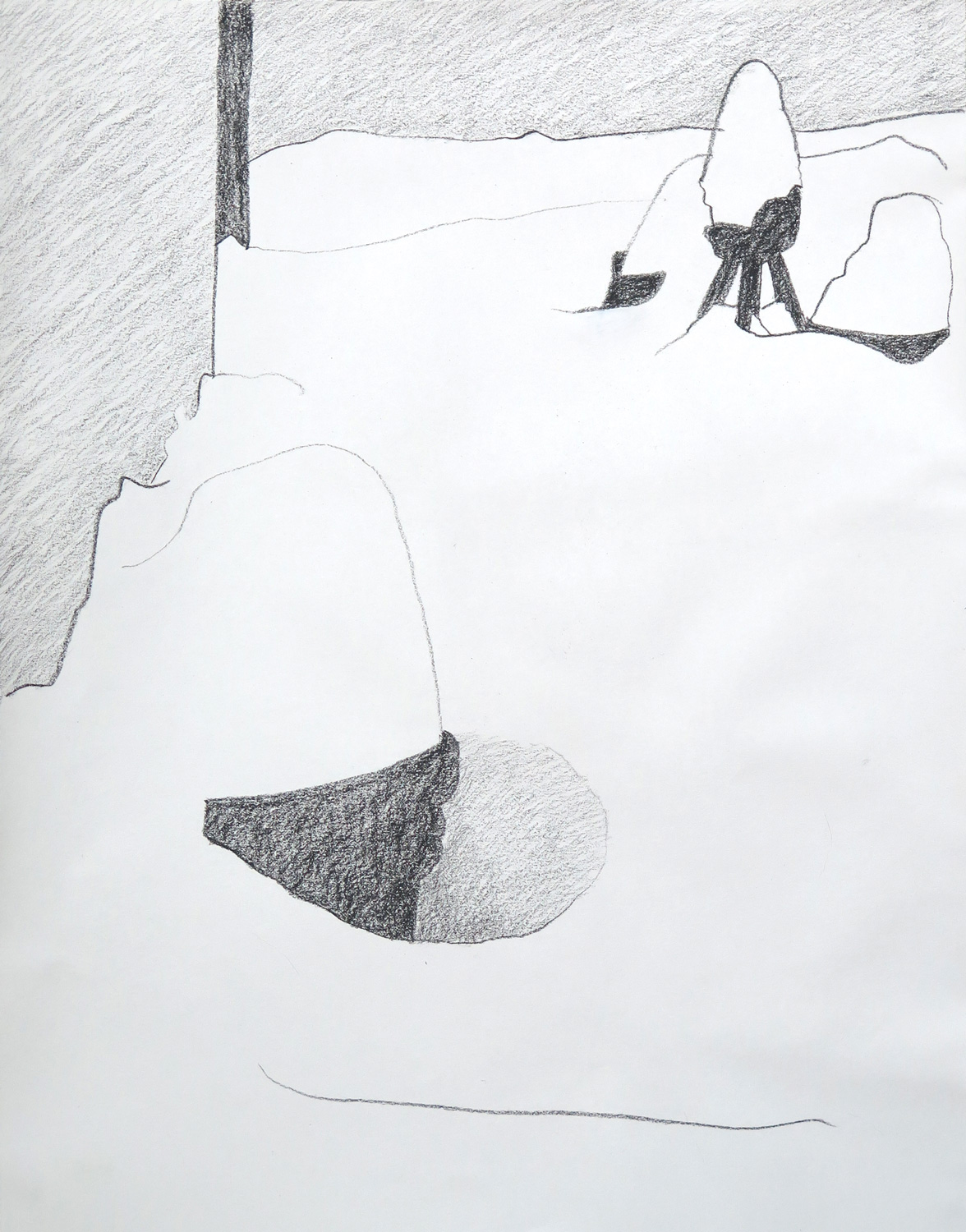
Snowy terrace with wooden stool and planters

4 IMG_4955
Charcoal on paper, 35 x 27.5 cm

A second sketch of the snow, here with an emphasis on the graphic qualities of the composition. Inspired by Richard Diebenkorn, I started with a very basic linear sketch which I completed by adding tonal values. The composition might work nicely as a print, too.


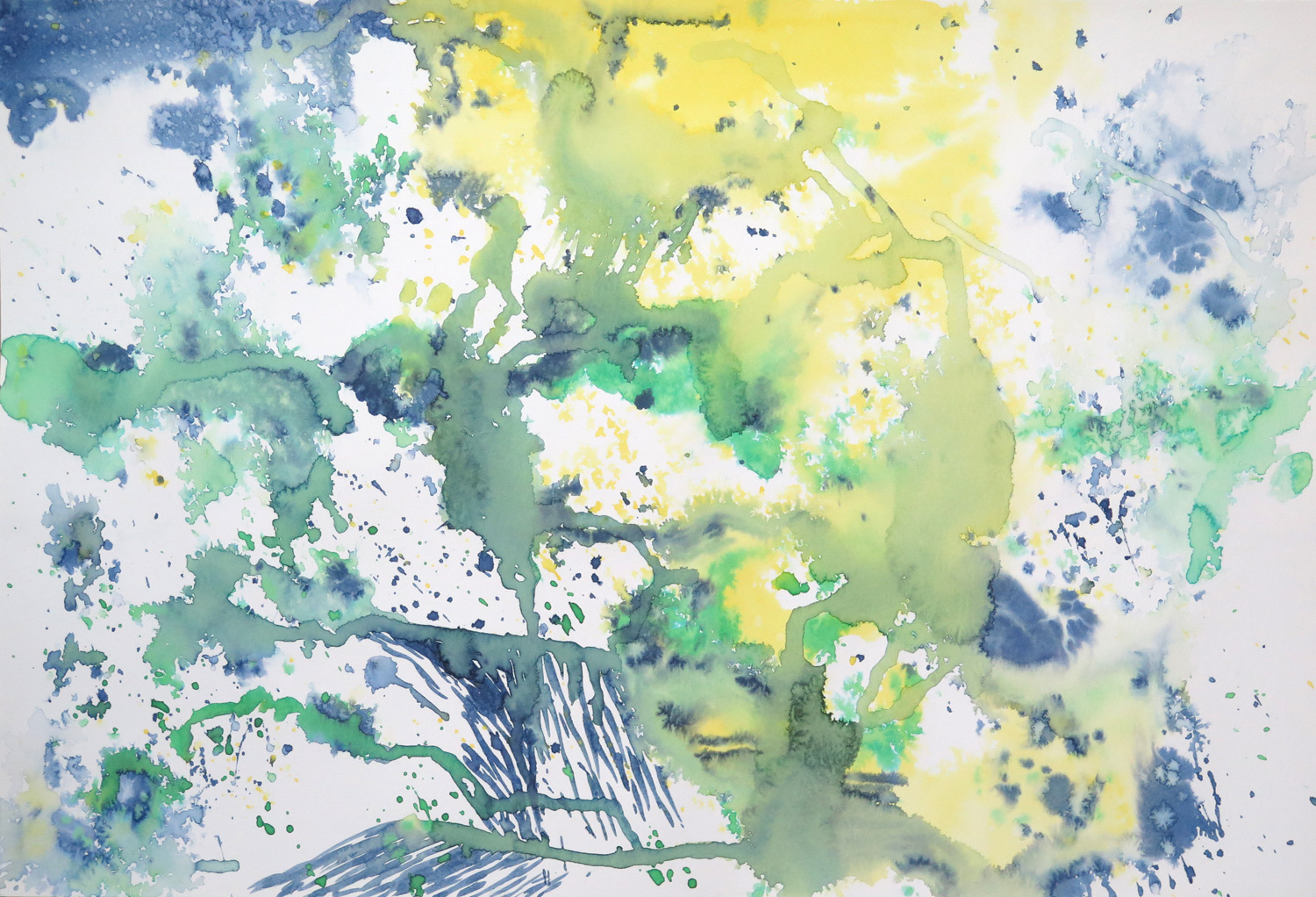
Yellow, green and blue abstract patterns (R)

5 IMG_4976
Watercolour on paper, 38 x 55.5 cm

This piece is part of a experimental watercolour series where I responded to the organic flow of lines in Natalies ‘Sea rocks’ sketch (Incubator period).


Imaginary landscape (R)

6 IMG_4951
Oil on paper, 33 x 51 cm

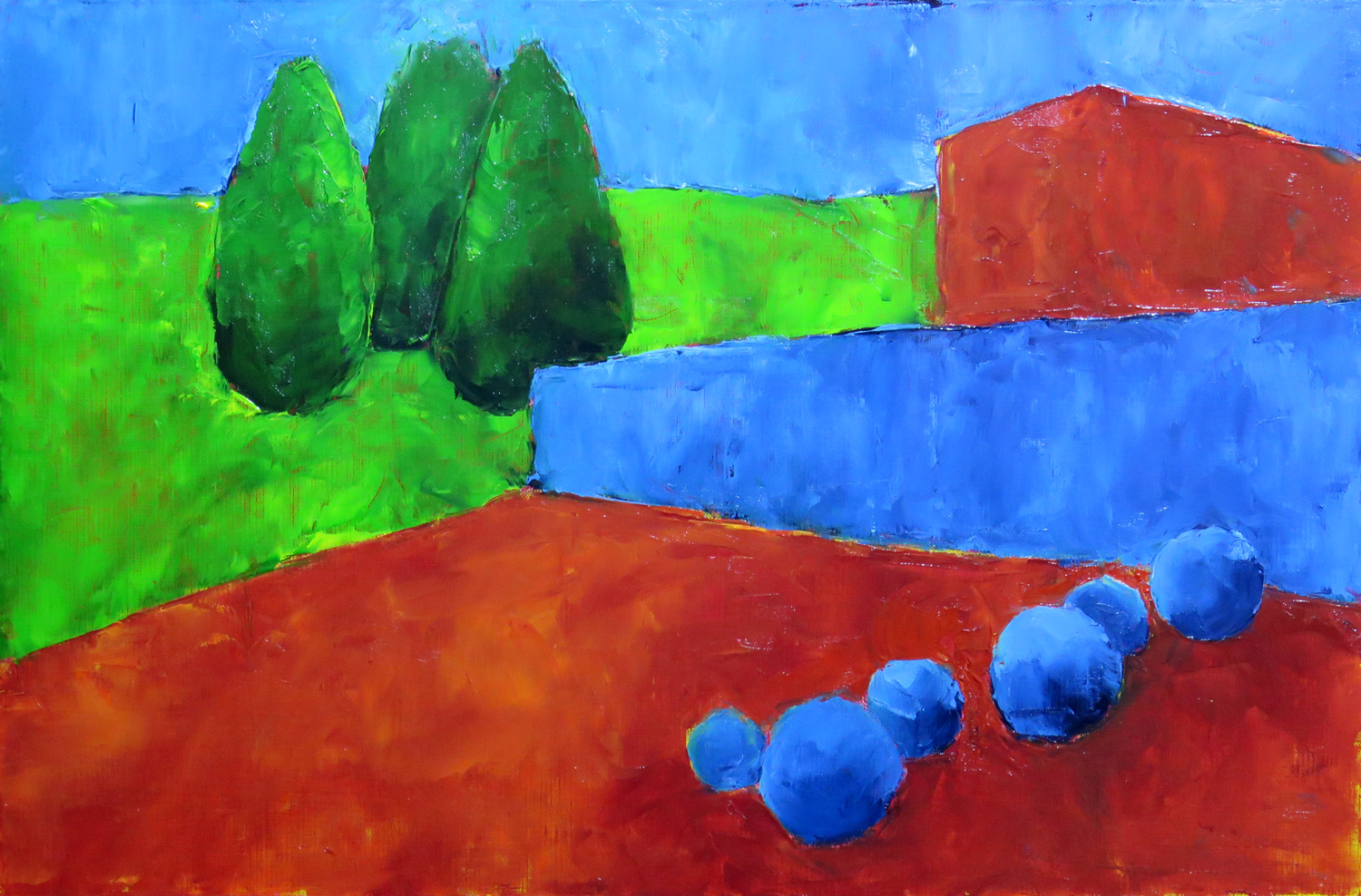
This piece was inspired by Natalie’s ‘Round Stones’ sketch (Incubator period), which I interpreted with a focus on landscape composition and abstraction. I responded to the peaceful and slightly mysterious atmosphere of the original sketch and built on my current fascination with Richard Diebenkorn’s abstract, colourful landscape paintings.

Natalie: January

First Snow

J5
Acrylic on paper, 20 x 20

It was the first day of snow and I rushed out to take some pictures before it started to melt away and look messy. Later that day I tried to depict this tranquillity using my photos for reference.


Jam

J6
Charcoal on paper, 21 x 29

A small study of fruits and a jar before making another portion of jam.


In the kitchen

J4
Acrylic on paper, 21 x 29

With this study I didn’t want to arrange the composition, as the main aim was on depicting the objects in the way they are on the daily basis. It was a good job my kitchen was clean on that day otherwise the 21 x 29 format wouldn’t have be big enough for it!


Play Yard (R)

J3
Acrylic on paper, 20 x 20

This study was an inspiration from Patricia’s Pheasant (Incubator period) even though the subject itself has no connection to it. Patricia’s pheasant looked rather proud walking on its own with its striking nature given colours. I immediatley wanted to find something similar, but in non-living objects. Luckily for me the snow helped to minimise the surounding’s clutter into more basic and clear surfaces and the children’s play yard, that I pass on the daily basis, stood out even more. I decided to focus exclusively on the colours and let the structures only to be suggested. The white ground was untouched, to represent snow. What I really wanted is to depict a sence of pride I detected in the Pheasant!


Thinking Man (R)

J2
Black ink, acrylic on paper, 20 x 20

This study was inspired by Patricia’s “Marble head of a man” (Incubator period). The face looked so serious that I wanted to undertake some continuation of the story. I ended up using a photo of my husband taken a few years ago while he was sitting in the garden with a no less serious face.


Black entrance (R)

J1
Acrylic on paper, 20 x 20

This study was a response to Patricia’s “A shed at Muscota Marsh, New York.” I almost felt a desire to continue this theme and see whether I would be able to find anything with bright colours during a winter period. Apparently there are plenty of things around that I didn’t pay attention to before! The three yellow doors are the ”black” doors of the local Philharmonic School near my residence. It was a sunny day, the snow had almost melted and this side entrance provided greater attraction to me than the main entrance. ( ‘’Black entrance’’ is not a spelling mistake – it’s a translation of a Russian term for tradesman’s entrance and as we can see it’s not necessarily black.)

Natalie: Incubator

Blocks of Apartment

1
Brown drawing pastels on paper, 21 x 30 cm

I was wondering around the town (Aktau, Kazakhstan) with my camera and to be honest I have no idea what the name of this street is since I arrived to Kazakhstan only recently. These blocks of apartments attracted my attention due to their round around the stair case architecture. I made my sketch at home from the photograph as I wanted to depict the sense of space I experienced while I was standing in there. These blocks were almost on they own and it felt as if they owned the place other than the other way round.

Round Stones

2
Brown drawing pastels on paper, 21 x 30 cm

This sketch was also taken from a photograph I took during my Walk around Aktau (Kazakhstan). The round stones are actually natural and not human made/adjusted decorative objects. This type of stone is apparently a regional natural phenomena and they can be seen in specific places in the local steppe which is approximately an hour drive from the town. Some were delivered into the town to decorate the public places as local people find them quite peculiar too.

Urta

3
Brown drawing pastels on paper, 21 x 30 cm

We were giving a tour around local steppe and it was phenomenal. The local nature is so beautiful and I tried to take as many pictures as I could so I could use them late for my sketches. At some point for reached a place where locals come for barbeque and natural warm water pools for bathing. The place was full of small urtas which are used for changing/resting rooms and for serving teas as well as food if you wish (which is cooked in a small café/restaurant on the actual site). We had no tea and neither we had a chance to enjoyed the bath due to time limitation but we were overwhelmed with such possibility in the middle of pretty empty steppe. One day I will depict this image in oils but at the moment I need to learn to draw!

See Rocks

4
Brown drawing pastels on paper, 21 x 30 cm

I tried to depict the Caspian see rocks from the photo I took while wondering around the place (Aktau, Kazakhstan). It was a very sunny day (yes, there are some days where there is no sun in Kazakhstan but it’s not as often as in the UK for sure!) The water was so clear that I could see the rocks with such clarity and I started to follow their patterns with my camera.

‘Mr Bin’

5
Brown drawing pastels on paper, 21 x 30 cm

This may be perceived a bit weird but I just like bins. I like their simplicity and diversity from country to country. This one looks like a basic robot from 60es with legs and arms in one attachment. It looked so lonely and rather cute. I could not resist from making a drawing of it.

Redundant Christmas tree

6
Brown drawing pastels on paper, 21 x 30 cm

I mentioned earlier that I have a weird attraction for bins but not to their content tough, just their external look and it has to be a bin outside in a public place, i.e. not a domestic one! Therefore this drawing has nothing to do with the actual bin because this bin is inside the place! I bought a Christmas tree and cut its branches straight away in order to decorate our apartment and then I put its trunk by the bin in our kitchen for throwing it away later on that day. When I walked into the kitchen again I found this scenery rather poetic in its rejection, loneliness and sadness, so I started to draw a life sketch straight away. The irony of this sketch is that it could be perceived as if it was made after the festive period but it was the other way round. What we see is not always what we think we see…or by looking at some messed up perspective of my bin what we see is not always what we draw!

Patricia: Incubator

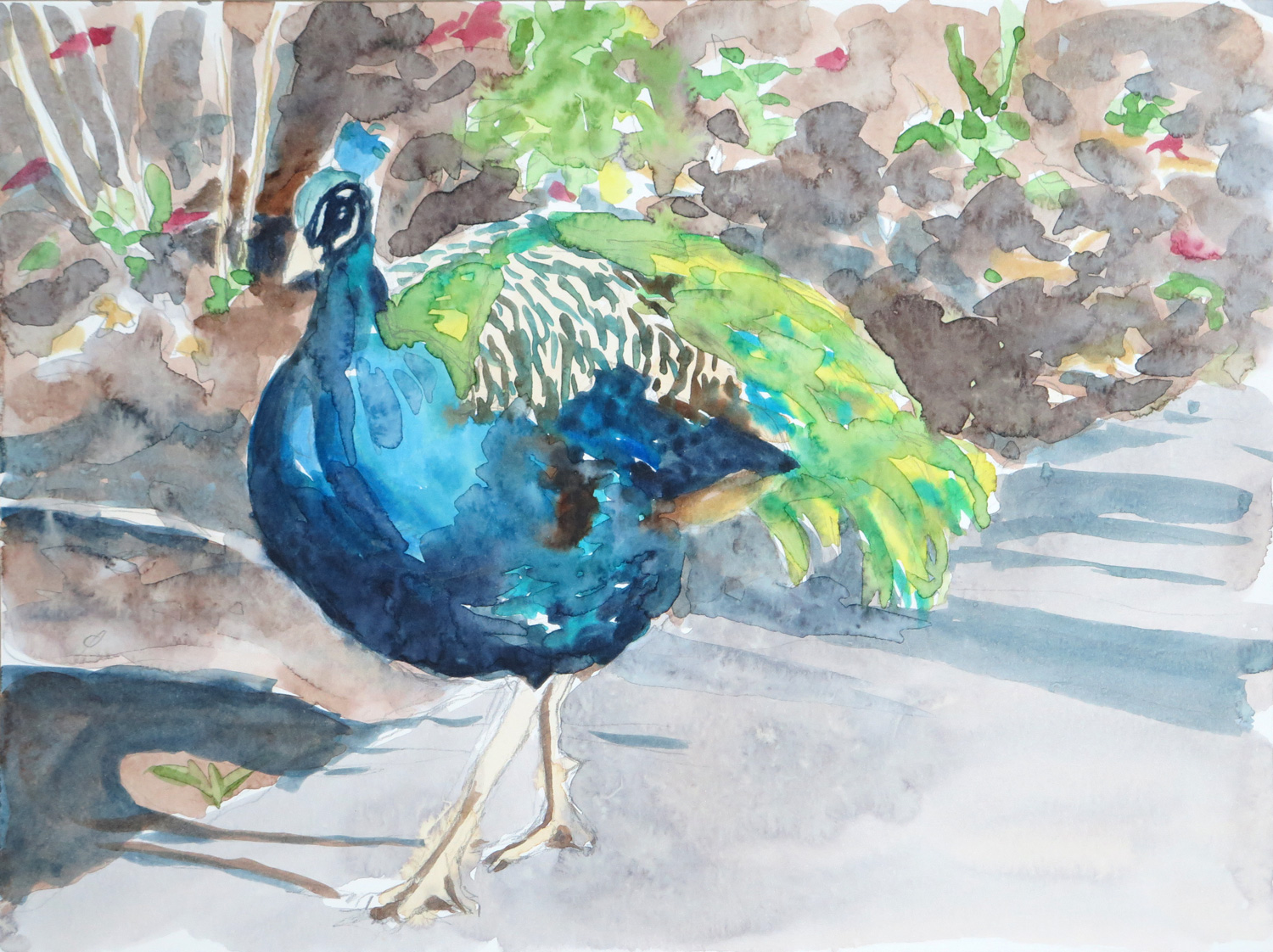
The pheasant

IMG_4640
The pheasant, watercolour on paper, 9 x 12 in (23.5 x 30 cm)

After a photo made in the Bronx Zoo, where the pheasants are allowed to roam freely on the grounds. I was fascinated by the colourful feathers and the relaxed gait of the animal. I made several sketches in pencil and watercolours, using liquid watercolours for the first time. I tried to preserve the brightness and brilliancy of the colours and not overmix.


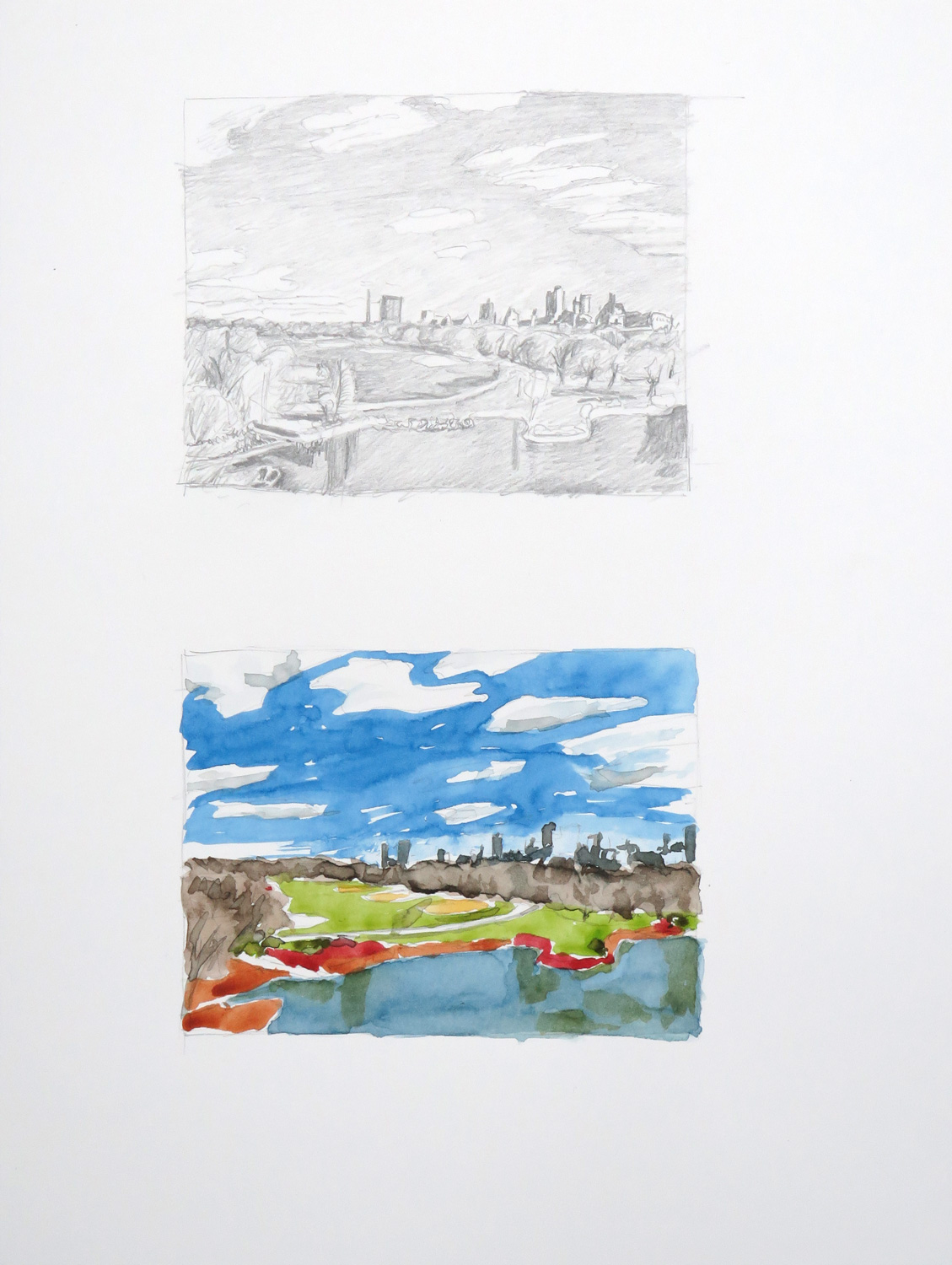
View over Central Park from Belvedere Castle

IMG_4642
Pencil sketch and watercolour on paper, 9 x 12 in (23.5 x 30 cm)

From a photo of a recent visit to Central Park, a view from Belvedere Castle over the turtle pond. The sheet is from a series of attempts to capture the essence of a landscape composition in small format by simplifying the shapes as much as possible.


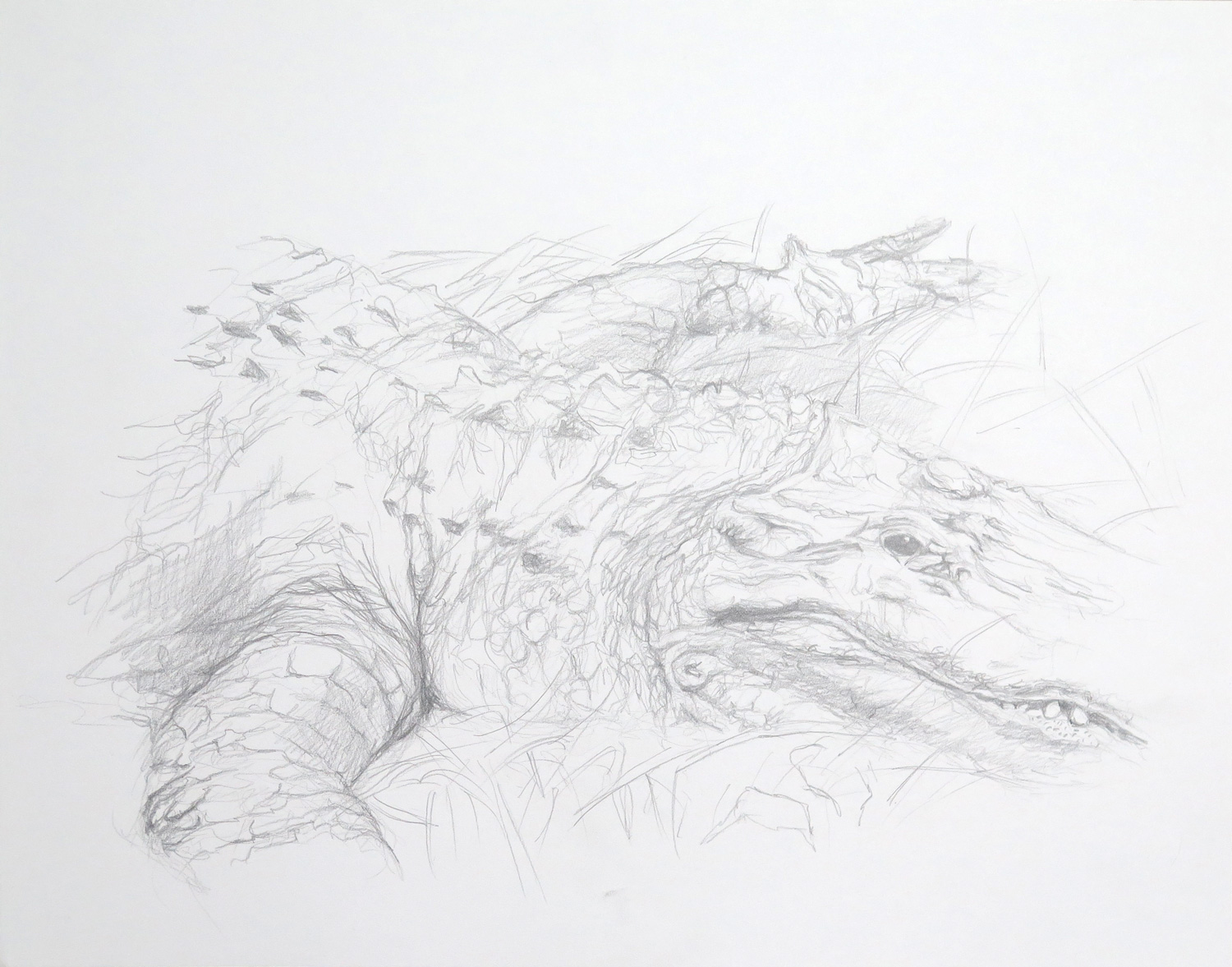
Alligator

IMG_4645
Pencil sketch on paper, 11 x 14 in (27.5 x 35 cm)

Sketch of a Mississippi Alligator, after a photo from the Public Domain (Wikimedia Commons). My starting point was the idea to sketch a Dinosaur skeleton. Researching images, I wondered how real Dinosaurs might have looked like in their times, and imagined them as huge reptiles. They were predators and may have looked a bit like alligators, and have been similarly dangerous. Researching alligators, I was fascinated by the leathery skin and the posture of the animal in the photo I chose as a source for my sketch.


A shed at Muscota Marsh, New York

IMG_4646
Watercolour on paper, 9 x 12 in (23.5 x 30 cm)

Watercolour sketch after a photo I made on a trip to Muscota Marsh on a hazy autumn day. I wanted to bring out the red-brown autumn colours more vividly by contrasting them to the blue-greenish shed.


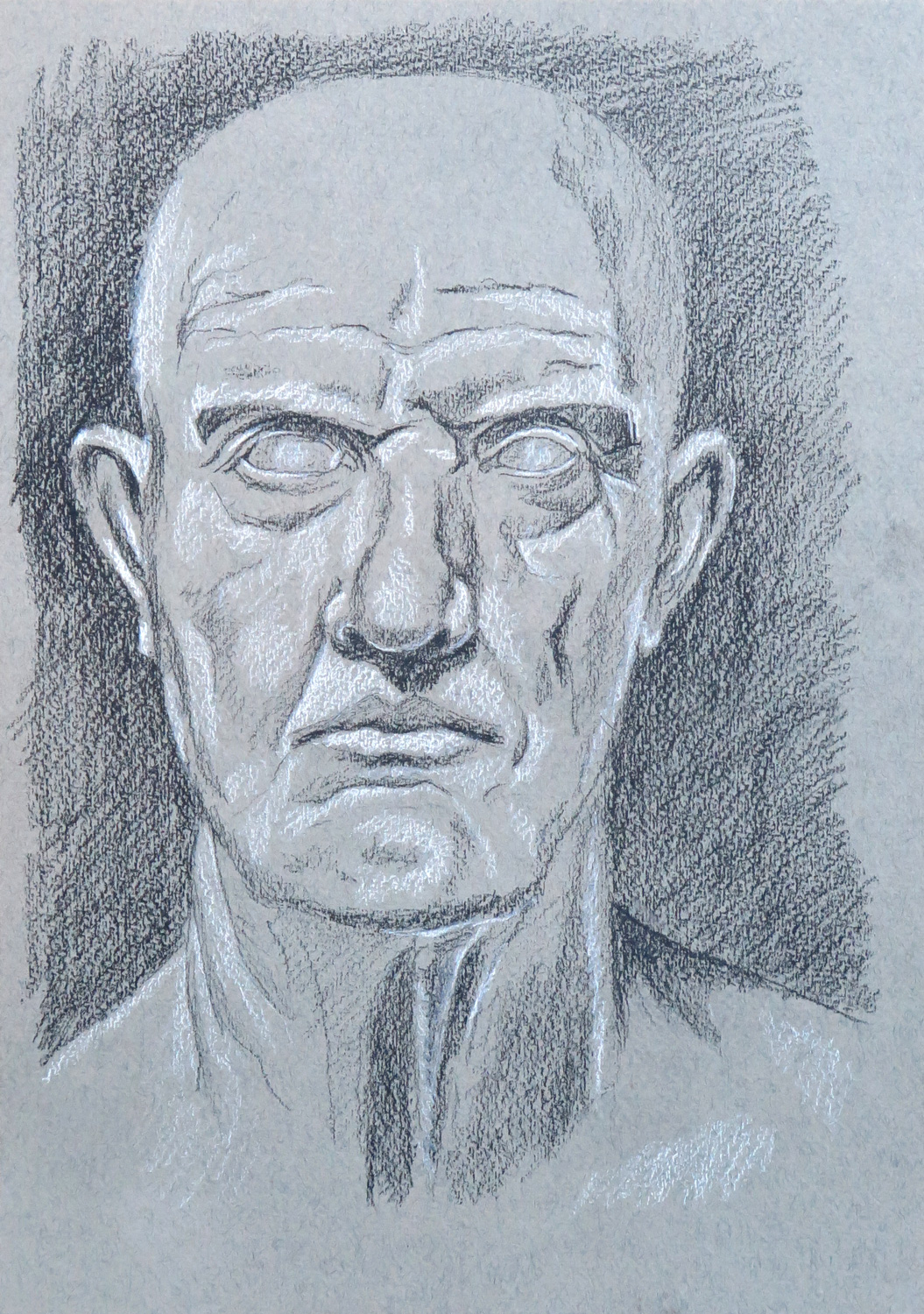
Marble head of a man

IMG_4649
Black and white charcoal on paper, 8 ¼ x 12 in (21 x 30 cm)

The idea to draw after Greek and Roman statues was inspired by recent acquaintance with Charles Bargue’s classical drawing course. This drawing is the third attempt of drawing from photos of busts published by the Metropolitan Museum of Art. The aim was to model the form three-dimensionally by highlighting and darkening, using the gray paper as midtone.


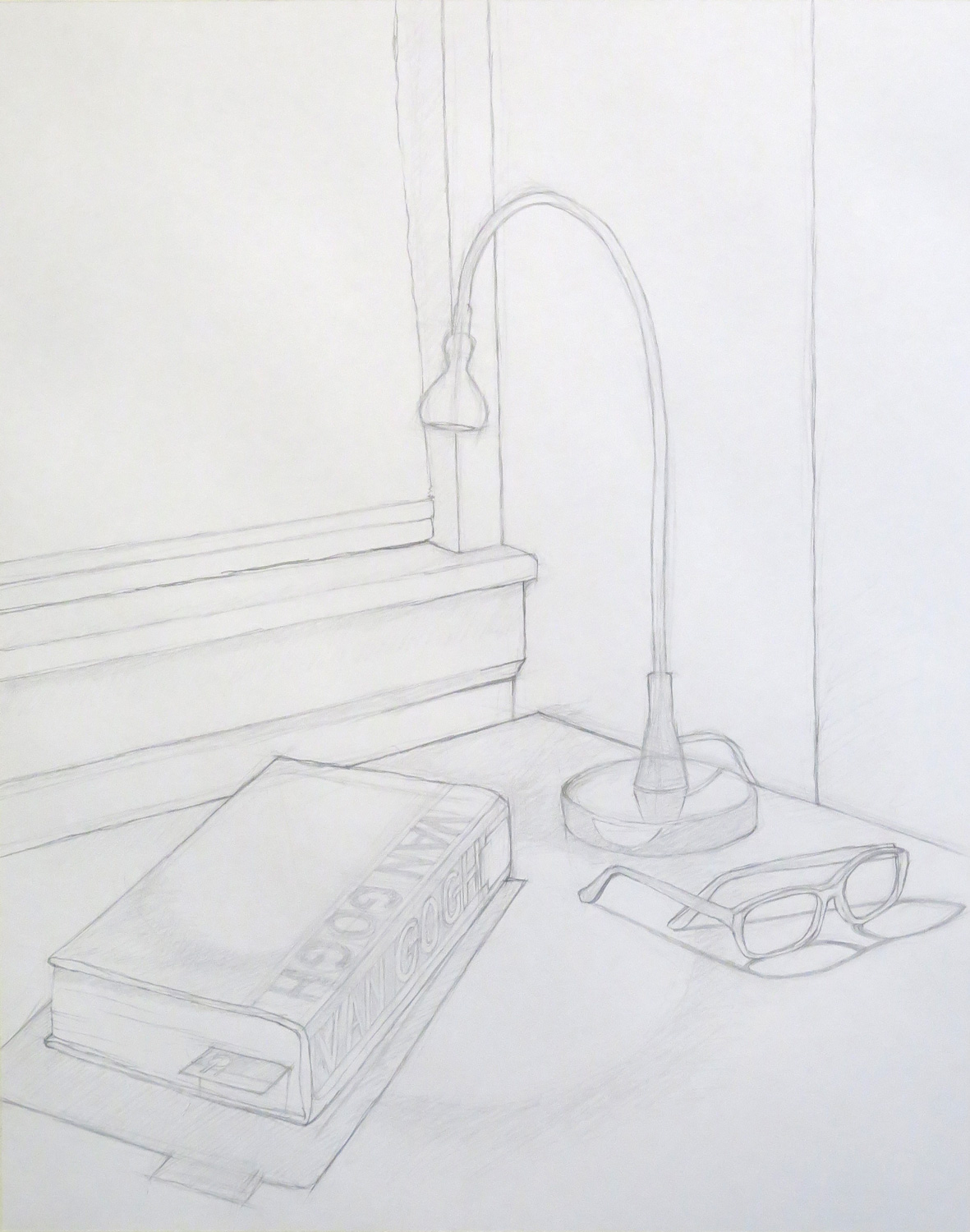
Still life with book and glasses

IMG_4653
Still life with book and glasses, pencil on paper, 16 x 20 in (40 x 50 cm)

A simple still life arrangement, the pencil sketch is a study towards a painting. It depicts the book I’m currently reading, a biography of Vincent van Gogh.